Most continuous improvement programs start with good intentions. The harder part is making them stick—and scale.
In Episode 78 of KPI Fireside, host Keith Norris sits down with Ram Sukumar, Director of Continuous Improvement for Hexpol Compounding Americas, to discuss what it takes to build a CI system across 13 manufacturing plants in the US and Mexico.
Over the past six years, Ram has helped deploy the Hexpol Production System across the network, trained more than 1,100 employees through white, yellow, and green belt programs, and built a culture where employees take ownership of improvement.
Here are some of the key lessons from the conversation.
Understand the Culture Before You Standardize
A CI system can’t simply be copied from one plant to another.
Every site has its own history, leadership, capabilities, and culture. Trying to force the same approach everywhere can create resistance rather than adoption.
Before rolling out a common system, take time to understand how each location currently operates.
Actionable tip: Assess each site’s CI maturity, talk to frontline employees and leaders, and identify what needs to be standardized versus what should remain local.
Build CI Capability Across the Organization
Hexpol’s four-level belt program helps develop improvement capability throughout the organization, starting with leadership training and extending through white, yellow, and green belt programs.
That’s important because CI can’t scale if all the knowledge sits within the CI department.
Leaders need to understand their role. Managers need to support projects. Frontline employees need the skills to identify and solve problems.
KPI Fire’s continuous improvement program resources explore how organizations can build the structure and participation needed to sustain improvement.
Actionable tip: Map the CI skills required at each level of your organization and build training around the biggest capability gaps.
Create a Common Language Through Metrics
When 13 plants measure performance differently, it’s difficult to compare results or learn from one another.
Ram discusses how Hexpol standardized metrics across its plants so managing directors can see performance and learn from what is happening elsewhere.
The goal isn’t simply consistent reporting. It’s consistent understanding.
KPI Fire’s continuous improvement metrics guide explores how metrics can help teams measure progress and identify where action is needed.
Actionable tip: For every critical KPI, define the calculation, data source, owner, reporting frequency, and target so every location measures it the same way.
Align Improvement With Strategy
One of the biggest obstacles to CI isn’t a lack of ideas. It’s competing priorities.
When every department and plant has its own initiatives, teams can become busy without necessarily working toward the same outcomes.
Ram explains how Hoshin planning helped Hexpol align priorities and connect improvement activity to broader business objectives.
KPI Fire’s Hoshin Planning resources explore how strategy deployment can connect organizational priorities with action.
Actionable tip: Before starting a project, ask: Which strategic objective does this support? Which KPI should it improve?
Build the Foundation Before Scaling AI
AI is another major topic in the conversation—but Ram’s approach is not to rush into technology simply because it’s available.
As Ram has said:
“Technology scales processes. People create them.”
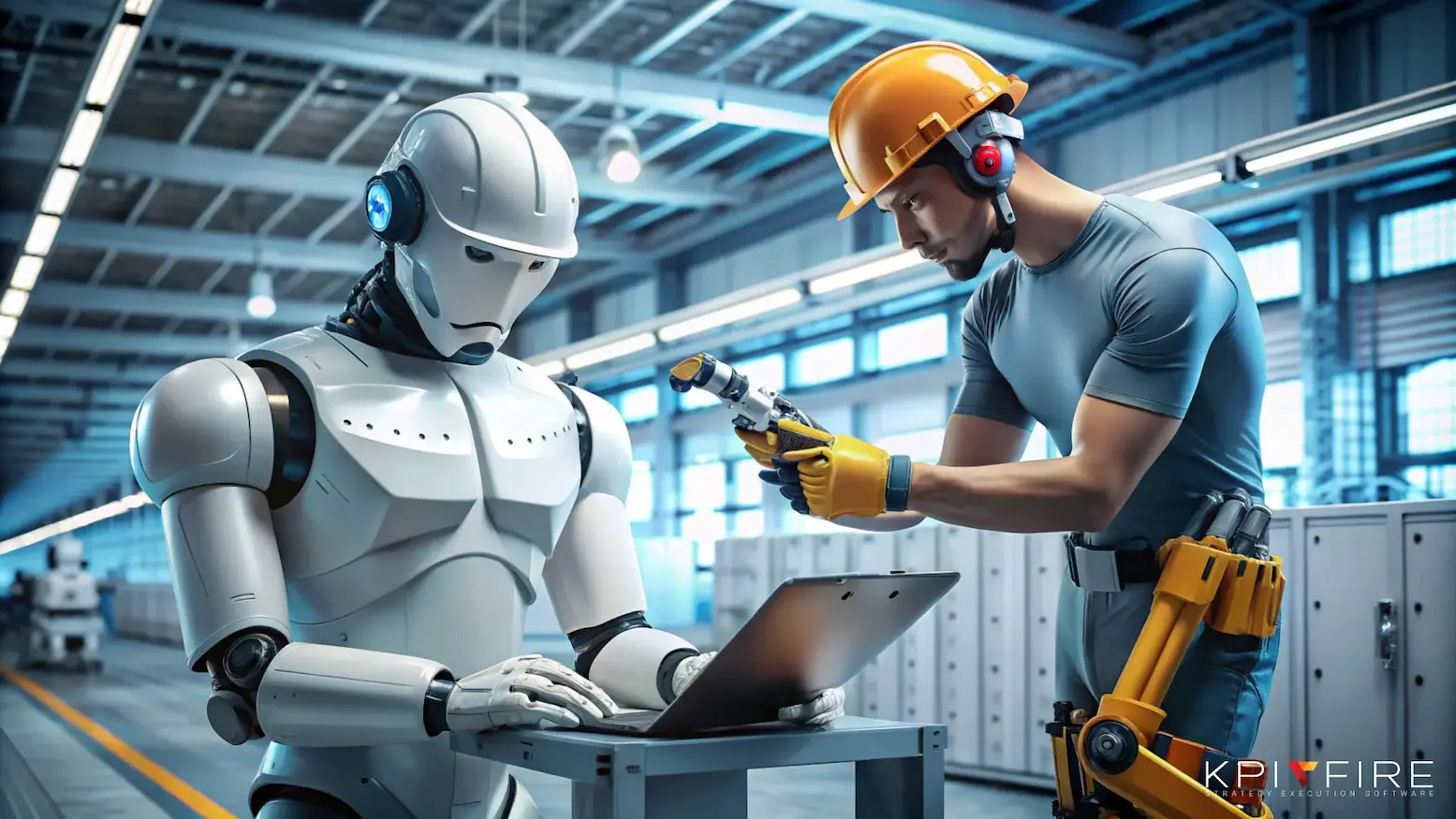
His broader point is that organizations need strong processes, standards, people, and data before technology can effectively accelerate improvement.
The sequence is simple:
People → Standards → Consistent Data → AI → Faster Improvement
Actionable tip: Before launching an AI initiative, make sure the underlying process is understood, the data is reliable, and employees understand the problem you’re trying to solve.
Make Improvement Part of How Work Gets Done
Perhaps the biggest lesson from the episode is that continuous improvement isn’t an event or a program.
A successful project is only one improvement.
A strong CI system creates the capability to keep improving.
That requires leadership involvement, employee capability, meaningful metrics, aligned priorities, and routines that keep improvement moving after individual projects end.
KPI Fire’s continuous improvement resources provide additional approaches for building improvement into everyday operations.
Actionable tip: Build regular routines around reviewing performance, identifying opportunities, implementing improvements, and sustaining the gains.
The Bigger Lesson: Build a System That Scales
Scaling CI across multiple plants isn’t about replicating the same projects everywhere.
It’s about creating the conditions that allow improvement to happen consistently:
Develop people. Standardize what matters. Align priorities. Measure performance. Share learning.
When those elements work together, continuous improvement becomes more than a collection of projects.
It becomes part of how the organization operates.
Want to hear the full conversation?
Listen to KPI Fireside EP 78 with Ram Sukumar and Keith Norris for the complete discussion on scaling CI, developing people, standardizing metrics, Hoshin planning, AI, and building a culture of ownership.